The 1919 Half Sovereign that Does Not Officially Exist
In the world of numismatics, it’s common to come across rare coins, unusual variants, or uncommon details. Much rarer, however, is finding a coin that seems authentic at first glance, but simply shouldn’t exist. This is the story of one of those times when checking one extra detail makes all the difference.
I have a fussy habit: I always check every gold coin I buy. I don’t just rely on my eyes or instinct, but I systematically check:
È un metodo che negli anni non mi ha mai tradito, fino a quando, per la prima volta nella mia vita,It’s a method that has never failed me over the years, until, for the first time in my life, I came across something that didn’t quite fit. I had in my hand a gold half sovereign, perfectly recognizable in style, shape, and metal… but with a date that wasn’t listed in any catalog:
nor Numista (the most famous and used website for cataloging coins),
nor World Coins (one of the most famous and authoritative paper repertoires in the world),
nor other historical catalogues.
At that point the doubt is inevitable:
If the date of the coin is not listed in any catalogue, could it be a fake?
So I started an even more in-depth analysis than I usually do.
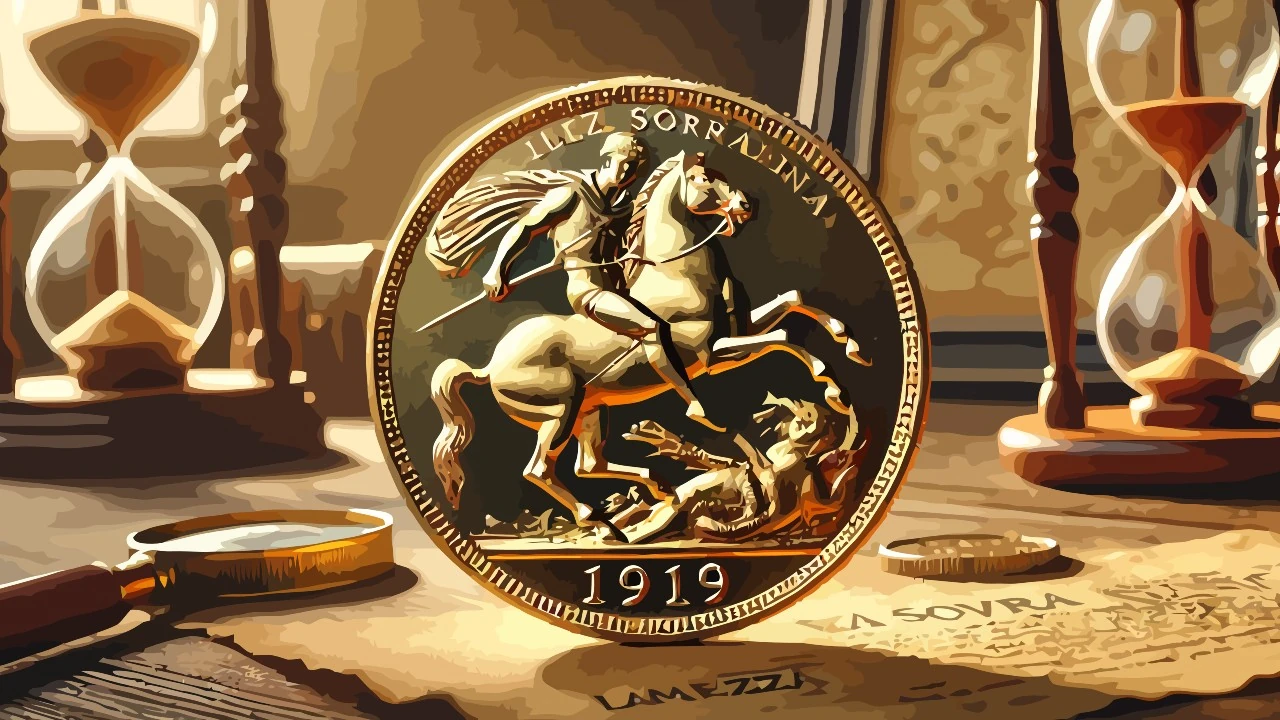
A 1919 half sovereign, apparently normal, only slightly worn.
The first alarm bell: the mass
I took a half sovereign that was definitely authentic and compared it with the suspect one.
The result was immediately interesting:
Suspected half sovereign: 4.036 g
Genuine half sovereign: approximately 3.993 g
Now, for those who know these coins well, 4.036 g is an anomalous value, because:
half sovereigns have very tight tolerances
a mass above 4 grams is already almost off the scale
That said, it’s always better to weigh more than less (at least for coins 😄):
If a coin weighs less, it almost always means less gold
if it weighs more, we are not losing precious metal
So, at least from the standpoint of the gold content, there was no obvious damage.
👉 However, a worn coin should weigh less, not more… wear, by definition, involves a loss of material.
But in this case, the opposite happens: the coin shows more worn reliefs but weighs more than a genuine half sovereign.
👉 Which leads me to hypothesize that the reliefs are not worn out, but were created that way.
Mass: suspect (left) and authentic (right) half sovereign.
A first look: everything almost normal
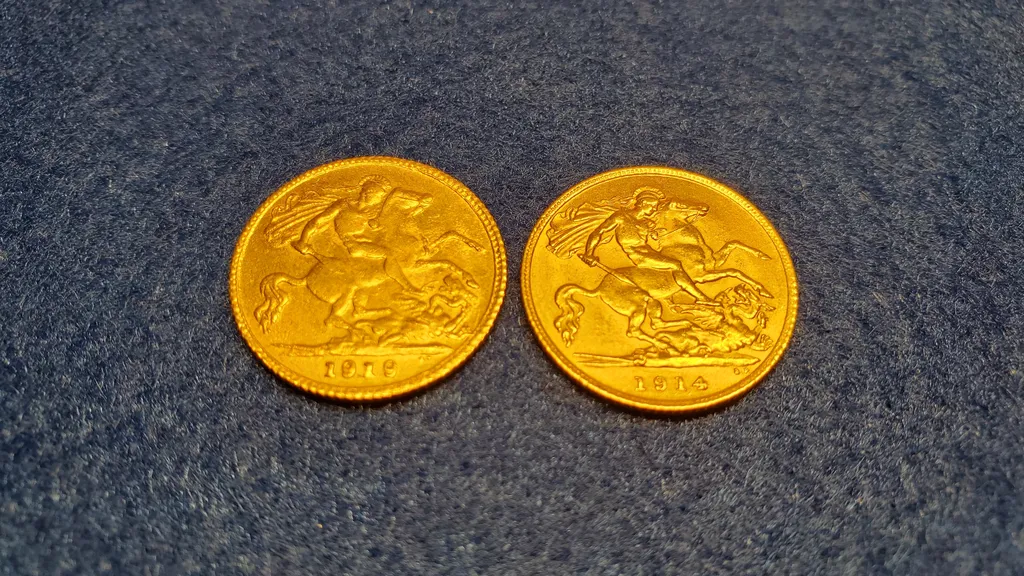
At that point I began the direct comparison, side by side, between the authentic coin and the suspect one.
At first glance, everything seemed to fit together:
correct style,
right proportions,
consistent iconography.
The suspect coin appeared only slightly less prominent, a little more worn, but this is a characteristic that can easily be found in older coins, especially if they have been handled or subjected to mechanical stress over time.
However, upon closer inspection, the differences became clear.
Obverse and reverse: suspect (left) and authentic (right) half sovereign.
Under the microscope: the differences emerge
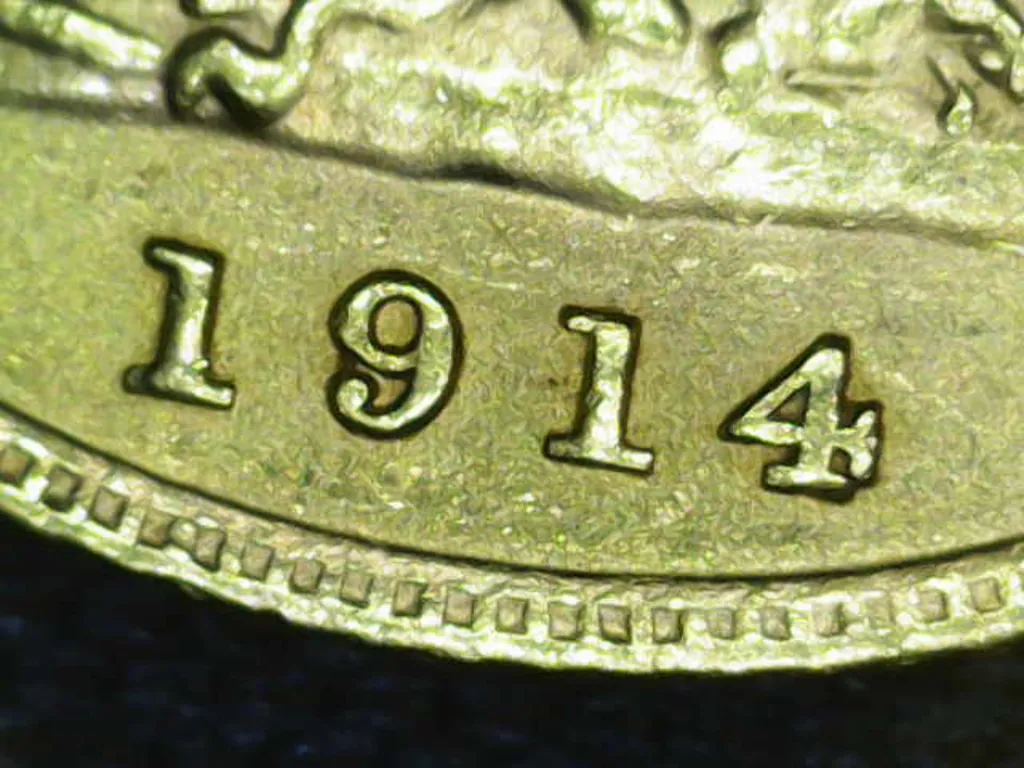
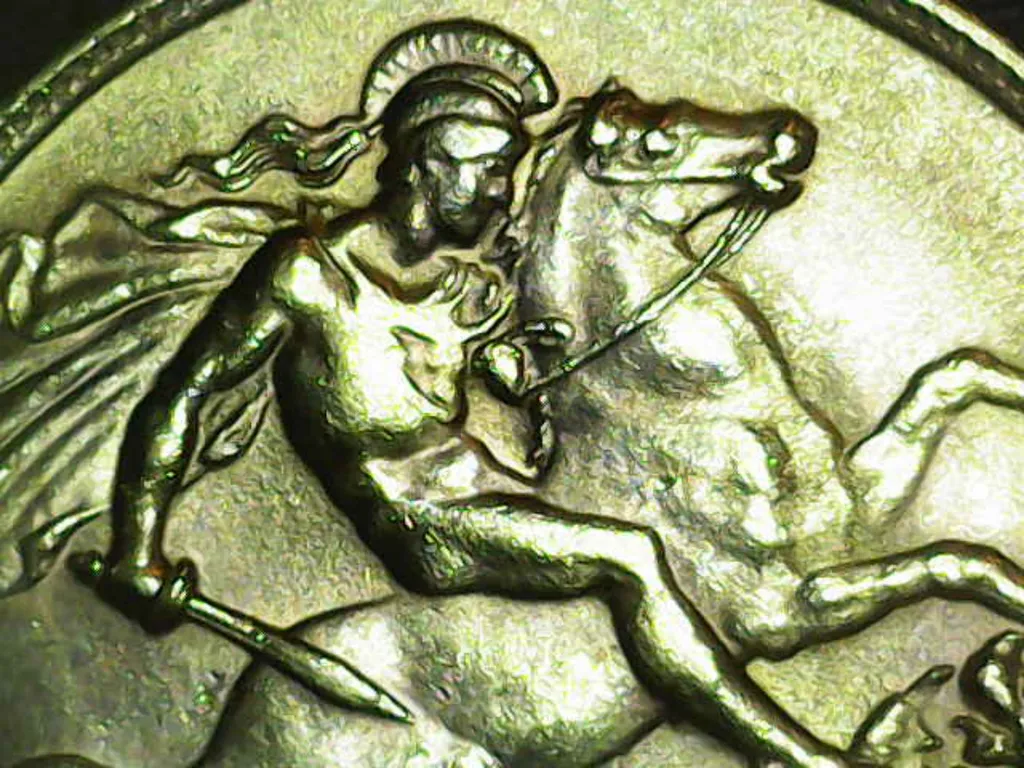
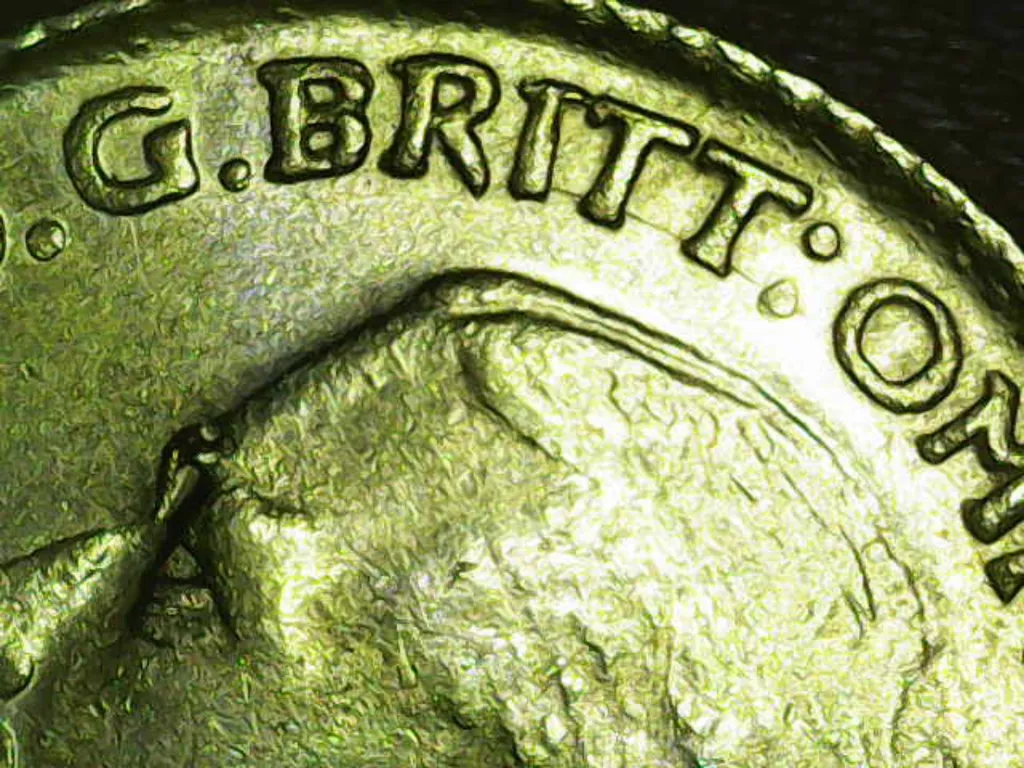
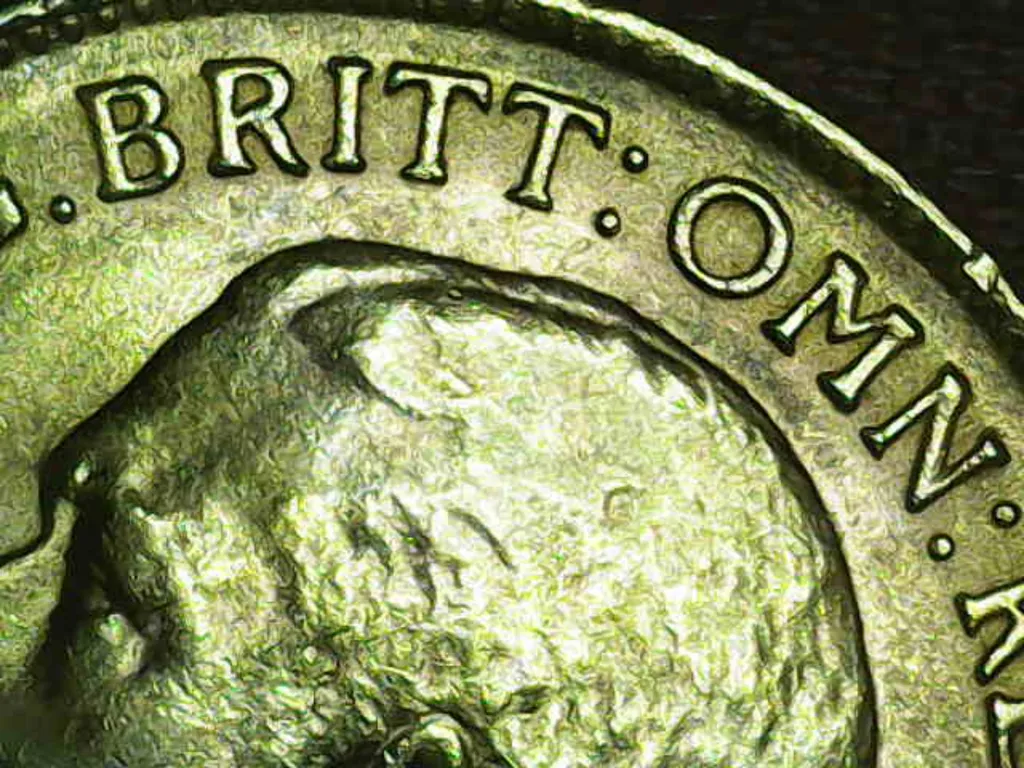
When subsequently examining the coin under a microscope, the differences become even more evident, going far beyond simple wear. This practically puts it in black and white that the suspect coin does not come from an official mint and is therefore not authentic.
Date and edge: suspect (left) and authentic (right) half sovereign.Obverse: suspect (left) and authentic (right) half sovereign.Reverse: suspect (left) and authentic (right) half sovereign.Letters: suspect (left) and authentic (right) half sovereign.Initials of Benedetto Pistrucci: suspect (left) and authentic (right) half sovereign.
The research and the decisive discovery
At this point I did some further research and it turned out without a shadow of a doubt that:
👉 The 1919 half sovereign was never officially minted.
In fact, there was a period between 1919 and 1924 when, for various reasons, the minting of half sovereigns was interrupted.
Is it a fake? No, not in the usual sense…
Here comes the most delicate and interesting point.
This coin is:
❌ unofficial
❌ not classifiable
❌ not a legal tender
But at the same time it is:
✅ real gold
✅ correct title
✅ consistent weight (actually, slightly higher)
✅ correct size
✅ perfect sound
The sound test was decisive: dropping it on the table or hitting it with a stick, the timbre was identical to that of an authentic half sovereign.
And this is crucial because even the slightest presence of tungsten or a different alloy would immediately alter the sound. A fake tungsten-plated one has a dull, dead sound, whereas here the sound is that of a classic gold-copper ring, with no discernible difference.
Here is an important certainty for those who bought the coin for the gold it contains:
👉 There is gold, and there is at least as much as there should be.
Why it’s not a scam
This coin is not a scam, for very concrete reasons:
it contains no less gold
does not imitate a rare or highly valuable numismatic date
does not try to “steal” the reputation of an official issue
In fact, it does the opposite by choosing a date that doesn’t exist, making itself recognizable to anyone who does a serious check. Who made it:
it was a high-level goldsmith or workshop
he had remarkable technical skills
he did not try to deceive about the value of gold
If I hadn’t checked the date, I would have easily dismissed it as a normal half sovereign. And that’s precisely the lesson.
Who might have made them, and why?
Coins of this type are not created by amateur counterfeiters. They require:
well-made dies
precise knowledge of alloys
technical ability of a goldsmith or specialized laboratory
The most plausible context is:
between the 1920s and the 1950s
strong demand for physical gold
coins used as savings
scarcity of some denominations
In that context, producing an “ideal half-sovereign” made perfect sense as:
commercial product
accumulation object
private minting
👉 The choice of the date 1919, non-existent for the half sovereigns, reinforces the idea that there was no fraudulent intent.
Conclusions
Anyone who encounters such a coin shouldn’t simply question whether it’s real or fake, but rather what story it tells. Because the gold is there, the maestry is adequate, and deception, strictly speaking, doesn’t exist.
We are therefore faced with neither an official coin nor a simple fake, but rather concrete evidence of a fine line between the official mint and a laboratory recreation. And, above all, a lesson for any collector: always look for that extra detail.














Lascia un commento